
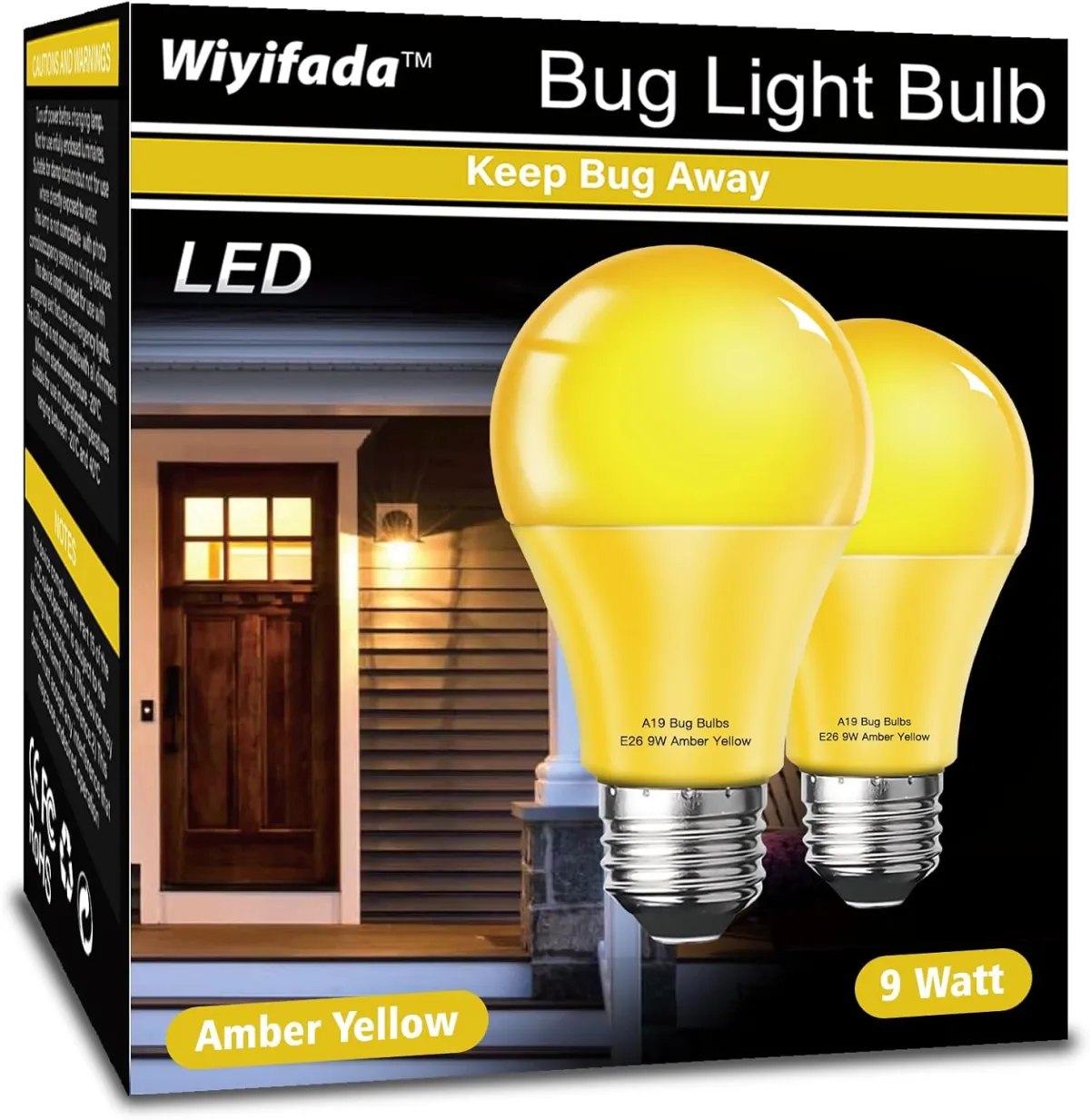
Summer evenings on the porch shouldn’t involve swatting away moths and mosquitoes every few seconds.
The right outdoor lighting makes all the difference between enjoying your backyard and retreating indoors.
This guide covers everything you need to know about bug light bulbs and how amber LED technology keeps insects away from your outdoor spaces.

Amber Bug Lights for Outside
These bulbs have the Amber Yellow which don’t attracting flying insects

Dusk to Dawn Bug Light Bulbs
Bulbs give sufficient illumination with cozy atmosphere but keep the bugs away as the yellow light does not attract them coming
How Bug Light Bulbs Work
Traditional white light bulbs emit wavelengths between 400-700 nanometers, which insects find irresistible. Amber bug light bulbs operate at approximately 2000K color temperature, producing wavelengths that most flying insects cannot see well. This simple shift in the light spectrum reduces bug attraction by up to 90% compared to standard outdoor lighting.
The science behind these bulbs involves understanding insect vision. Most bugs navigate using ultraviolet and blue light wavelengths. Amber lights emit minimal UV radiation and stay within the yellow-orange spectrum, making them nearly invisible to common pests like:
- Moths
- Mosquitoes
- Flies
- Gnats
- June bugs
Benefits of LED Amber Bug Lights
Energy Efficiency
Modern LED bug light bulbs outdoor use only 9 watts while producing light equivalent to 100-watt incandescent bulbs. This 85% reduction in energy consumption translates to significant savings on electricity bills. A typical household replacing four porch lights saves approximately $40-60 annually on energy costs.
Extended Lifespan
Quality amber LED bulbs last up to 20,000 hours – roughly 18 years with average nightly use. The aluminum and plastic cooling systems prevent overheating, allowing continuous operation without burnout. Compare this to traditional bug lights that require replacement every 1-2 years.
Versatile Applications
These bulbs work effectively in multiple locations:
Outdoor Spaces:
- Front and back porches
- Patios and decks
- Garden pathways
- Garage exteriors
- Pool areas
Indoor Uses:
- Bedrooms (creates calming ambiance)
- Hallways
- Bathrooms
- Kitchen night lighting
Choosing the Right Bug Light Bulbs
| Feature | Standard LED | Amber Bug Light LED |
|---|---|---|
| Color Temperature | 3000K-5000K | 2000K |
| Bug Attraction | High | Very Low |
| Energy Use | 9-13W | 9W |
| Lifespan | 15,000 hours | 20,000 hours |
| Light Coverage | 180° | 150° |
When selecting bug lights for outside, consider these factors:
- Brightness Requirements: A 9W amber LED provides sufficient illumination for most residential applications while maintaining bug-repelling properties.
- Socket Compatibility: Most amber bug lights use standard A19 bases, fitting existing fixtures without modification.
- Weather Resistance: Look for bulbs rated for outdoor use with proper moisture protection.
- Coverage Area: Calculate one bulb per 100-150 square feet of outdoor space for optimal coverage.
Installation and Placement Tips
Strategic placement maximizes the effectiveness of amber bug lights:
Primary Entry Points
Install bulbs near doors and windows where bugs typically congregate. Position lights 6-8 feet from entrances to draw insects away from high-traffic areas.
Secondary Lighting
Use amber bulbs in landscape lighting and pathway fixtures. This creates a bug-free zone throughout your property rather than just at entry points.
Height Considerations
Mount fixtures 8-10 feet high when possible. Higher placement disperses light more effectively and keeps bugs away from human activity zones.
Real-World Performance
Users report dramatic reductions in bug activity after switching to amber LED bulbs. In Michigan, where summer insects create significant problems, homeowners notice immediate improvements. The amber lighting creates comfortable outdoor environments without the constant annoyance of flying pests.
The warm light bulb color also provides unexpected benefits. The 2000K temperature creates a cozy atmosphere perfect for evening gatherings. Many users appreciate the softer, more relaxing ambiance compared to harsh white lights.
Common Questions and Solutions
Do amber lights attract any bugs?
While no light completely repels all insects, amber bulbs attract significantly fewer bugs than white lights. Some beetles and certain fly species may still appear occasionally, but the overall reduction makes outdoor spaces much more enjoyable.
Can these bulbs work indoors?
Yes, amber LED bulbs function perfectly indoors. The warm color temperature creates relaxing environments in bedrooms and living spaces. Many people use them as night lights or mood lighting.
How bright are 9W amber bulbs?
Despite lower wattage, these bulbs produce ample light for most applications. The 100W equivalent rating means they match traditional bulb brightness while using minimal electricity.
Maintenance and Longevity
Proper care extends bulb life beyond the rated 20,000 hours:
- Clean fixtures monthly to prevent dust buildup
- Ensure adequate ventilation around enclosed fixtures
- Replace bulbs in pairs for consistent lighting
- Use surge protectors in areas with unstable power
Cost Analysis
Initial investment in quality amber LED bulbs pays off quickly:
Traditional Bulbs (Annual Cost):
- 4 bulbs × 60W × 8 hours × 365 days × $0.12/kWh = $84.10
Amber LED Bulbs (Annual Cost):
- 4 bulbs × 9W × 8 hours × 365 days × $0.12/kWh = $12.61
Annual Savings: yes
Making the Switch
Transitioning to amber bug light bulbs requires minimal effort. Simply replace existing bulbs with amber LEDs – no rewiring or fixture changes needed. Start with high-traffic areas like main entrances and expand coverage based on results.
Users consistently report satisfaction with their purchase decisions. The combination of bug reduction, energy savings, and pleasant lighting makes these bulbs a practical upgrade for any home. Whether dealing with Michigan’s notorious mosquitoes or simply wanting peaceful evenings outdoors, amber LED technology delivers reliable results.
The 150-degree light distribution ensures adequate coverage without creating dark spots. Multiple pack options (2, 4, or 8 bulbs) allow customization based on property size and lighting needs. With proper installation, these bulbs transform outdoor spaces into comfortable, bug-free environments perfect for summer entertaining or quiet relaxation.